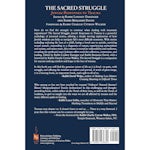
How do we find the strength to continue when dealing with traumatic experiences? The Sacred Struggle: Jewish Responses to Trauma is a powerful anthology of personal stories, offering a deeply moving exploration of how Jewish wisdom can help us navigate life’s most difficult moments. With stories including enduring the loss of a child, losing a loved one to suicide, surviving sexual assault, responding to a diagnosis of cancer, experiencing antisemitism and racism, and many more, this volume is rooted in vulnerability and resilience, revealing the profound ways Judaism offers tools for reflection, connection, and healing. Edited by Rabbi Lindsey Danziger and Rabbi Benjamin David, with a foreword by Rabbi Charlie Cytron-Walker, The Sacred Struggle is a companion for anyone seeking comfort and hope in the face of trauma.
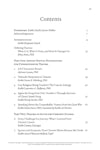
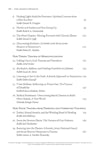
Foreword: Rabbi Charlie Cytron-Walker Acknowledgments Introduction Rabbi Benjamin David Defining Trauma: What It Is, What It Does, and How It Changes Us Betsy Stone, PhD Part One: Jewish Textual Foundationsfor Understanding Trauma 1. Job’s Traumatic Breach Adriane Leveen, PhD 2. Talmudic Responses to Trauma Rabbi Dvora E. Weisberg, PhD 3. Can Religion Bring Comfort? The Case for Liturgy Rabbi Lawrence A. Hoffman, PhD 4. Again the Song Goes Out: October 7 Through the Lens of Classic Israeli Song Rabbi Wendy Zierler, PhD 5. Speaking About the Unspeakable: Prayers from the Gaza War Rabbi Dalia Marx, PhD; translated by Rabbi Ari Vernon Part Two: Trauma of Acute and Chronic Illness 6. Every Challenge Is a Journey: What I Learned from Chronic Cancer Rabbi Lindsey Danziger 7. Spoons and Scripture: How Chronic Illness Became My Torah Rabbi Annie Villarreal-Belford, PsyD 8. Finding Light Amid the Fractures: Spiritual Lessons from a Bike Accident Rabbi Daniel B. Gropper 9. Hawks and Snakes and Not Giving Up Rabbi Robert A. Nosanchuk 10. The Next Chapter: Moving Forward with Chronic Illness Rabbi David N. Jaffe 11. Discovering Holiness: A Jewish Love Story in the Shadow of Alzheimer’s Rabbi Debra R. Hachen Part Three: Trauma of Marginalization 12. Calling Out to God: Trauma and Transition Rabbi Ariel Tovlev 13. Alcoholics, Addicts, and Finding Ourselves in Judaism Rabbi Susan B. Stone 14. Learning to See in the Dark: A Jewish Approach to Depression Rabbi Debra Kassoff 15. T’mol Shilshom, Reflecting on Times Past: The Trauma of Disability Rabbah Rona Matlow, DMin 16. Radical Resistance: Overcoming Racial Trauma to Build Olam Chadash, A New World Yolanda Savage-Narva Part Four: Trauma from Personal and Communal Violence 17. Esther, Sexual Assault, and the Winding Road of Healing Rabbi Iah Pillsbury 18. From the Narrow Places: The Trauma of Gun Violence Rabbi Joel Mosbacher 19. Running into the Flames: A Jewish, Army National Guard and Army Reserve Response to Trauma Rabbi Aaron A. Stucker-Rozovsky 20. The Holocaust and October 7: The Personal Impact of Generational Trauma Rabbi David Spinrad 21. Witnessing History: A Memphis Rabbi’s Journey Through the Assassination of Reverend Dr. Martin Luther King Jr. Rabbi Harry K. Danziger 22. September 11, 2001: Crossing the Narrow Bridge Rabbi Serge A. Lippe 23. Two Bombs: How the Boston Marathon Bombing Changed My Life Rabbi Benjamin David 24. A Personal and Communal Journey Toward Healing: The Story of Parkland Rabbi Melissa Zalkin Stollman 25. From Brokenness to Blessing: Serving as a Chaplain in Pittsburgh After the Tree of Life Massacre Rabbi Shira Stern, DMin, BCC Part Five: Trauma from Natural Disasters and Pandemics 26. Floods, Winds, and Wheels: Lessons from Hurricane Katrina Rabbi Robert H. Loewy 27. The Rising Floodwaters: Surviving Hurricane Harvey Rabbi Adrienne P. Scott 28. The Still, Small Voice: How Faith Helped Navigate California’s Wildfires Rabbi Paul Kipnes 29. Choosing Life and Finding Resilience in the Face of AIDS Rabbi Denise L. Eger 30. Nachamu Ami, Comfort My People: Serving as a Hospital Chaplain During COVID Rabbi Leah Cohen Tenenbaum, DMin, BCC-PCHAC Part Six: Trauma and Community 31. The Legacy of Trauma: Reckoning with the Reform Movement’s Ethical Misconduct Rabbi Marina Yergin 32. Leaving a Toxic Community: Ritual Moments Rabbi Robyn Ashworth-Steen 33. The Unexpected Trauma of Retirement Rabbi Daniel A. Roberts Part Seven: Trauma and Family 34. Broken Glass, Mended Heart: Healing from the Trauma of Divorce Rabbi Elizabeth Bahar, MAHL 35. Conceiving Hope: Navigating Infertility in the Jewish Community Rabbi Jen Gubitz 36. Im Yirtzeh HaShem: Rebuilding a Shattered Theology After Stillbirth Rabbi Karen Glazer Perolman 37. Seeking Solace: Faith After My Father’s Suicide Deborah L. Greene 38. The Crawl Space Between Grief and Gratitude: The Devastating Death of a Daughter Rabbi Susan Talve 39. A Path to Healing Through Tradition: Jewish Mourning Rituals and Beliefs After the Death of My Child Rabbi Rex D. Perlmeter, LSW Nechemta: Finding Comfort Rabbi Lindsey Danziger Contributors
Rabbi Lindsey Danziger is the director of campaigns at the Religious Action Center of Reform Judaism, guiding synagogues and clergy across the country in their work to organize and mobilize for justice. She is also an adjunct professor at Hebrew Union College–Jewish Institute of Religion, where she teaches community organizing. Rabbi Danziger resides in Nashville, Tennessee, with her husband, Rabbi Michael Danziger, and their three children, Ben, Aviva, and Noa.
Benjamin David is the rabbi at Reform Congregation Keneseth Israel in Elkins Park, Pennsylvania. He is a respected teacher, writer, and leader within the Reform Movement. The son of Rabbi Jerome and Peggy David, Rabbi David was born in Philadelphia and grew up in Cherry Hill, New Jersey. He graduated Phi Beta Kappa from Muhlenberg College in 1999 before enrolling in the Hebrew Union-College Jewish Institute of Religion. As a rabbinic student, he taught widely, and worked with students of all ages at Shaaray Tefila of Manhattan, the 92nd Street Y, the Jewish Guild for the Blind, and Temple Beth Am of Monessen. As a student he won multiple awards in the fields of midrash and Talmud and co-founded a literary review, Davar Aher. He was ordained from the New York campus of HUC-JIR in 2004. Following ordination he served for seven years as the associate rabbi at Temple Sinai of Roslyn in New York, where he worked closely with synagogue youth and on such causes as Israel, social action, and community organizing. Rabbi David is deeply committed to URJ Camp Harlam, where he spent time as a camper, counselor, and supervisor. He now serves each summer on the rabbinic faculty. A competitive runner, he has run 18 marathons, including the Boston Marathon twice and the New York City Marathon four times. He is also a co-founder of the Running Rabbis, which brings clergy together to run and walk in the name of shared causes. As a cancer survivor, he works with cancer patients and their families and is active both locally and nationally in the Leukemia and Lymphoma Society. His wife, Lisa, a fellow Camp Harlam alum, is the director of Camp Harlam. They are the proud parents of Noa, Elijah, and Samuel.
In this book you will find the genuine voices of life as it is lived—in pain, with struggle, and offering the wisdom to endure and prevail. A work of great range, it is a bracing book, an important book, and a gift to all of us. –Rabbi David Wolpe, author of Making Loss Matter: Creating Meaning in Difficult Times
Who among us has not been touched by trauma? Violence? Natural disaster? Illness? Marginalization? Family dysfunction? In this challenging and thought-provoking book, rabbis reflect on the Torah of their lives, as well as the Torah of tradition, to give us insight into the ways we are all affected by trauma and the many different paths to healing. –Rabbi Laura Geller, coauthor of Moments That Matter: Marking Transitions in Midlife and Beyond
Trauma may shatter us. It doesn’t have to end us. … There is a way forward. I pray that this volume can be a source of strength for you. – From the foreword by Rabbi Charlie Cytron-Walker, Temple Emanuel, Winston-Salem, NC
A thoughtful set of reflections from religious leaders and others on how Jewish history, teachings, and traditions engage with crisis, tragedy, and their fallout. ... Though aimed at Jewish readers, the collection's emotional honesty will resonate with anyone interested in how tradition can help one face what can't necessarily be fixed. A searching, intimate guide to how Jewish tradition holds suffering with meaning and presence. --Kirkus Reviews
Timely, informative, compelling, inspired, and inspiring —Midwest Book Review
The writers featured show the struggles they went through in order to reconcile Judaism and the trauma they experienced, while outlining the different paths that often took. ... The essays are uniformly well done, although different ones will obviously resonate with readers depending on their life experiences or the skill of the author. -- Rabbi Rachel Esserman, The Reporter Group